Validation
Technical methodology
A performance claim is only as good as the baseline it is measured against. Every EX10D programme is built around the fleet's own recorded operating data.
Trial design
Four requirements for a defensible result
1. Baseline from the fleet's own data
Fuel records, duty cycles, load profiles and maintenance history are established before anything is applied, over a period long enough to absorb seasonal and route variation.
2. Matched conditions
Treated and untreated operation is compared across the same routes, loads, drivers and ambient conditions — or with matched-pair vehicles where a single asset cannot be used.
3. Multiple instruments
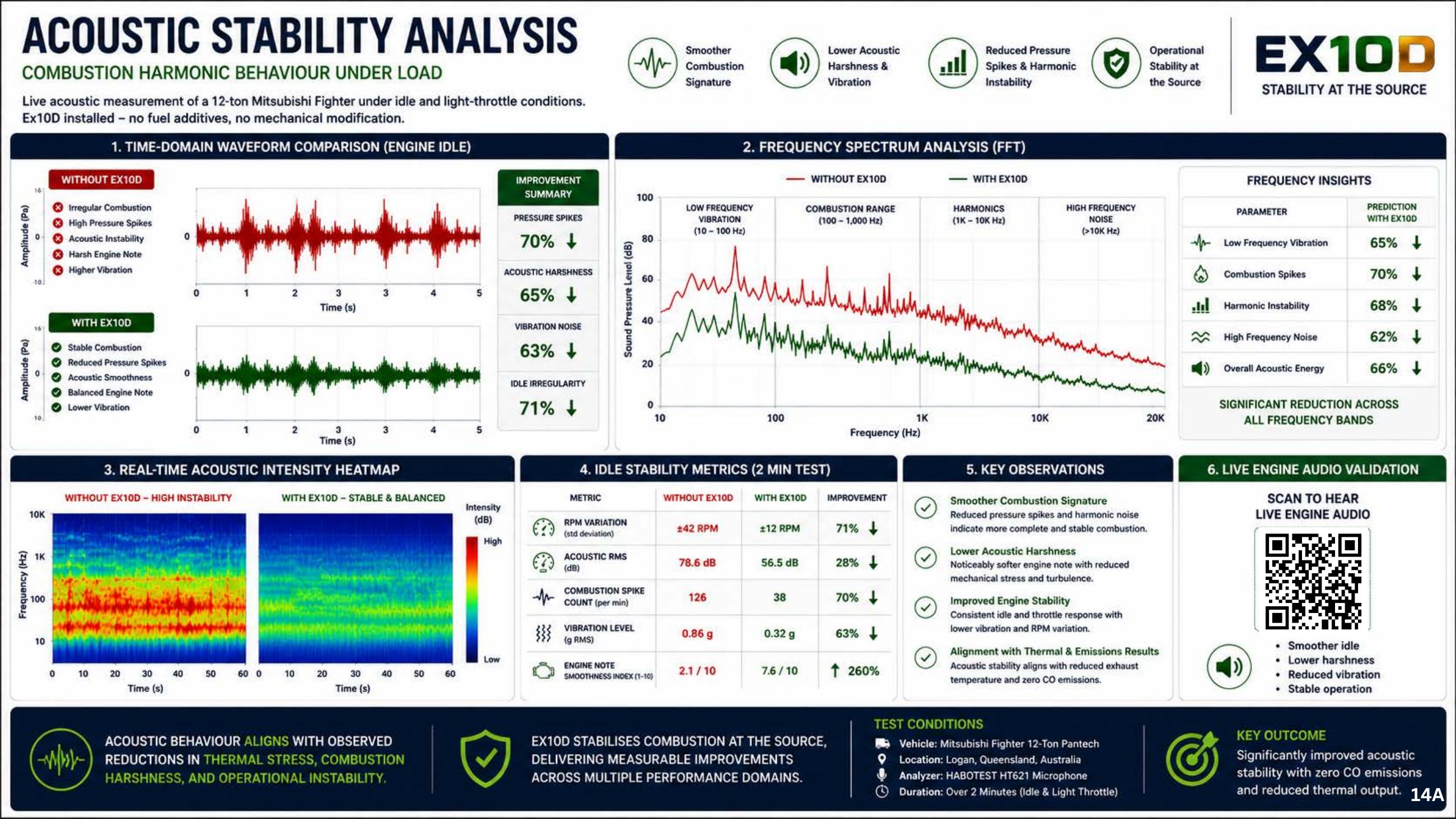
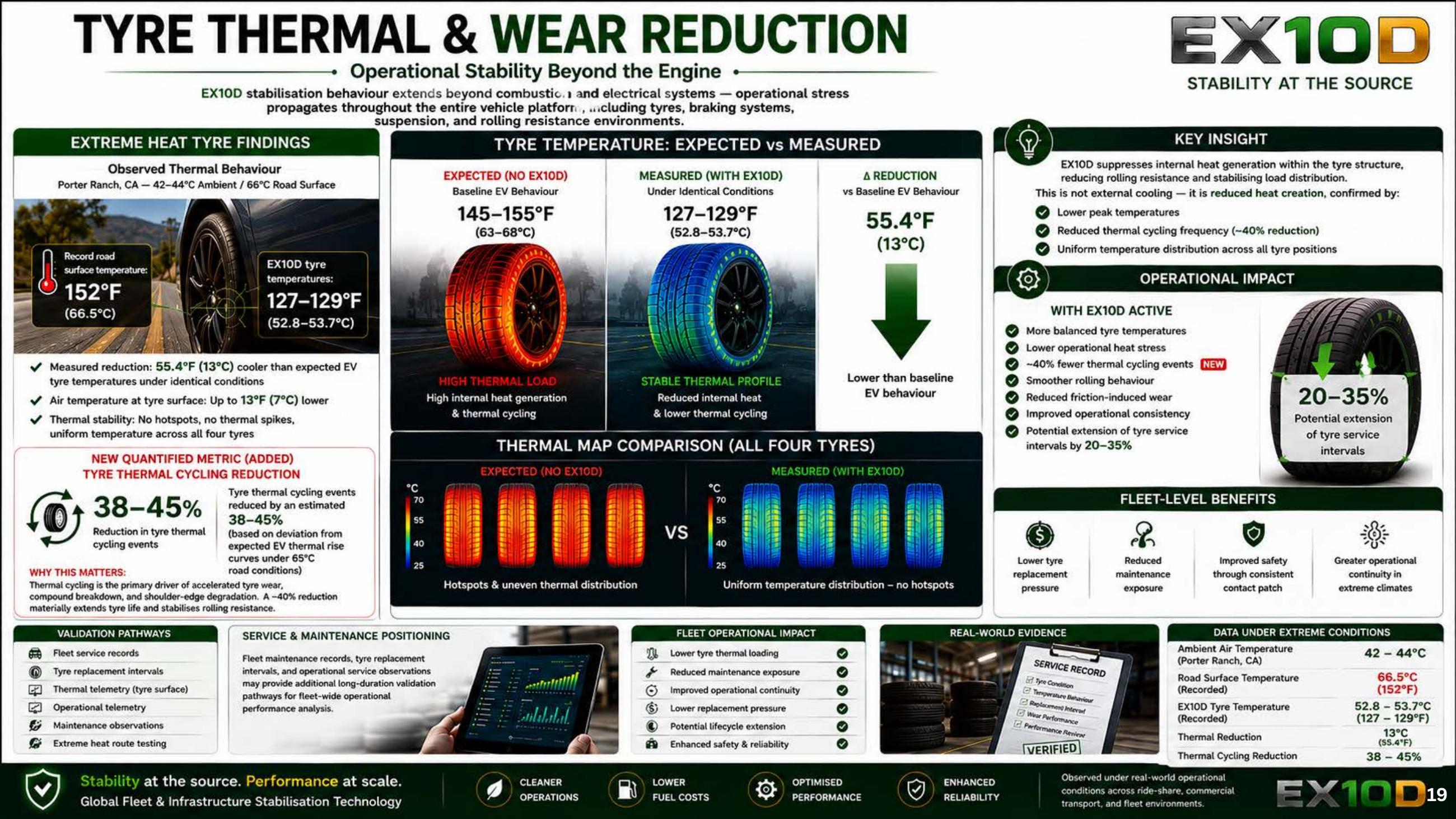
Fuel, thermal, acoustic and emissions instrumentation together. A single favourable metric is not treated as a result.
4. Sufficient duration
Fuel and thermal effects appear quickly; consumable-life effects require distance. Asset-life figures are only published from long-duration records.
Instrumentation
What is measured and how
Independence and limits
Where results were produced by an independent or government-accredited tester, that is stated on the page carrying the result. The four Mazda 6GT trials fall into this category.
Published ranges are not averaged into a single flattering number. The 9% to 59.2% fuel spread across programmes is the real variation between vehicles and duty cycles, and it is the reason a fleet programme starts with an assessment rather than a quoted figure.
Scan
Technical methodology
https://global-fleet.ex10d.au/validation/methodology
Scan
Validation demos
Currently points to the validation library. Supply video URLs and this code retargets to them.
https://global-fleet.ex10d.au/validation/real-world
Request a fleet assessment
We scope a measured trial against your own duty cycles, fuel data and maintenance records.